
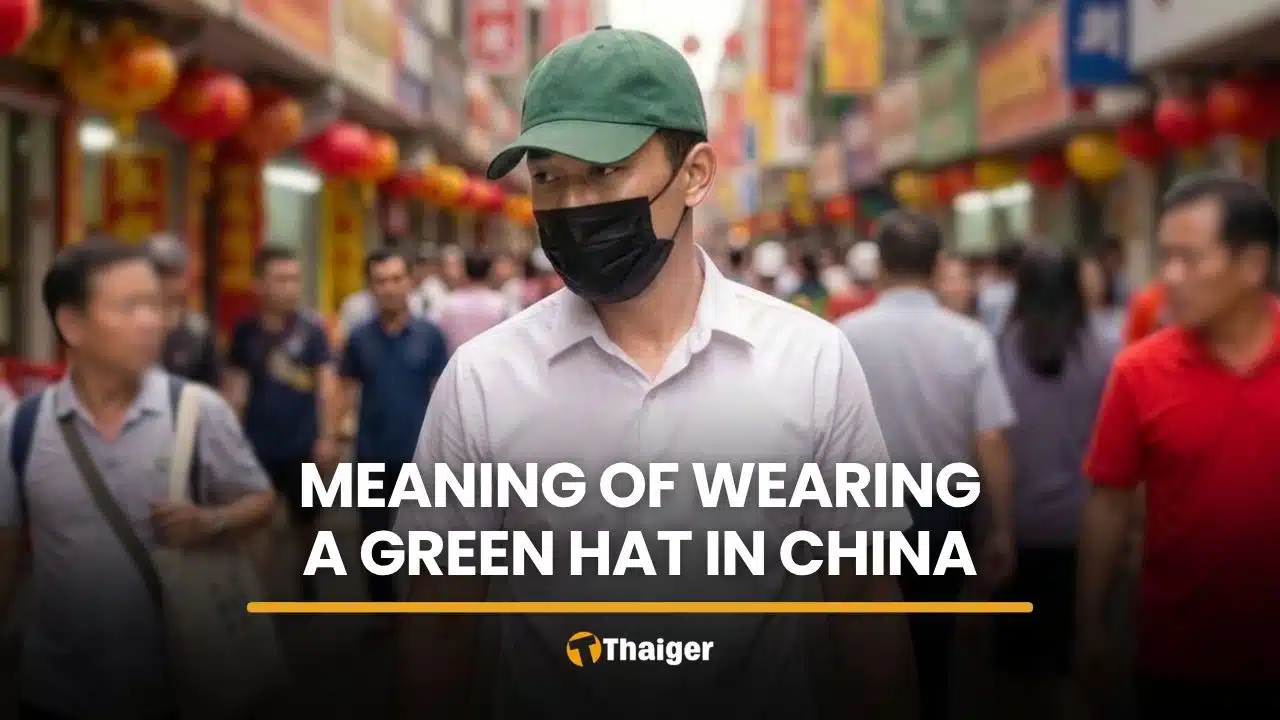


A traveller has warned tourists against wearing a green hat in China after his cap attracted strange looks and a stranger used Google Translate to explain its embarrassing meaning.
On September 22, the man shared a photograph of his green hat in the Facebook group รีวิวเที่ยวจีน รีวิวร้านอาหารจีน ด้วยตัวเอง, which shares independent reviews of travel and restaurants in China. He described an awkward encounter during his latest trip.
The traveller said Chinese people had been looking at him strangely until someone approached him and tried to explain through Google Translate that he should not wear a hat of that colour.
He learned that wearing a green hat can suggest a man has been cheated on by his wife or partner, making him the subject of ridicule.
Initially, he thought the stranger was playing a joke on him. However, after looking up the expression himself, he became so embarrassed that he no longer dared to wear his green hat.
He shared the experience to warn other travellers and asked group members whether the expression still carried the same meaning in modern China.

The post prompted several responses from people familiar with the custom, including a woman who said she had lived in China for around a year and was married to a Chinese man. She said her husband regularly bought her hats as gifts during festivals but avoided green ones.
She also shared two Chinese expressions, “你被绿了” and “他给你带绿帽子了”, which she explained were ways of saying someone had been cheated on by their partner.
Other commenters offered explanations for how the association may have developed.
One recounted a folk tale about a married woman who had a secret lover while her husband regularly travelled for work. Whenever the husband was leaving home for several days, she would prepare his clothes and give him a green hat to wear.
According to the tale, her lover would watch for the husband leaving in the hat, taking it as a signal that they could meet while he was away.
Another commenter suggested a different historical explanation, claiming that green clothing had once been associated with certain lower-status groups in ancient China, including people connected with prostitution and the families of sex workers.
The commenter said green hats subsequently became a derogatory symbol associated particularly with men whose wives or partners had been unfaithful.
Some commenters questioned why travellers should care what others thought of their clothes, arguing that people should be free to wear whatever they like without worrying about how strangers might react.
In response, another commenter compared wearing a green hat in China to wearing black to a wedding or red to a funeral. Different cultures have different customs and etiquette, they said, and while wearing a green hat is not wrong, travellers should respect local traditions.
They added that the traveller was fortunate people appeared to find it amusing, as accidentally wearing something considered insulting could cause greater offence.
Related news
- Thailand beats China to seal 2028 Olympic volleyball berth
- China orders 4-million EV recall over hidden door handles, Tesla hit hardest
- Southeast Asia leans toward China over US, 2026 survey finds
The story Thai man wears green hat in China, learns what it really means as seen on Thaiger News.